- Every child is unique
- Understanding the Brain of a child. How to evolve it?
- Learning a unique experience.
- How does a child learn? Modes / learning disabilities / super-abilities
- Whats Education? and how does learning differ from Education?
- Every Parent is a Teacher and every Teacher is a Parent
- Every Parent is not a Teacher and every Teacher is not a Parent
- What to impart? -- Clarification
- How to impart? -- Means of communication
- When to impart? -- Timing
- How to work on imparting? -- A parent's homework (might be mind work???)
- Is it imparting the Kid or the Parent getting imparted?
- Setting the example for kid.
Wednesday, September 01, 2010
Probable Contents Further
Whats this "45 Minutes Stuff?"
These 45 minutes are not just "45 Minutes" literally but they are like "45 minutes" of purposeful engagement with the kid on daily basis. When I say purposeful engagement what I mean in the words of Covey is "Begin with End in mind". So we must have thought out whats the outcome of the interaction prior. The following things comes to my mind when the word interaction comes into picture:
- Whats the purpose
- What is that we want during the course of interaction -- or subject of the communication
- Whats the opportune time for interaction
- Which mood I should broach the topic
- What should be the out come
- Can this interaction be split
- And the probable conversation content for the topic. In some of the conversations we might need to take positions and we should have well thought out the options
- win-loose
- win-win
- loose-win
- Most importantly how should you transfer -- this depends on the type of the child.
- What are the modes of transfer
- Conscious level implant
- Sub-conscious level implant
Inception of "45 minute parenting"
Today I made a promise to my daughter saying that I would start penning down in my blog a separate line for escapades/ adventures I had with my kids.
Watch out for more on this.
Tuesday, April 20, 2010
Tim Berners Lee on the year Open Data went world wide
Friday, December 25, 2009
Analysis of the turmoil of AP
Any sane person must have observed the following things which are the observations/facts during this 20+ day period in Andhra Pradesh.
- Rajasekhar Redddy's departure leaving a leadership vacuum
- Center though have nominated Rosaiah as the chief minister was caught between the devil and the deep blue sea
- He could never proclaim that he is "THE" chief minister for long period ever tried to defend himself that he neither has interest nor the capacity to hold to it. This might have well been the apprehension of being stamped "Disloyal" to Rajasekhara Reddy
- Vested interests and the Media have done their due diligence to evoke the sentiments of the people so that the existing government is not stable for long time.
- The elected members of the assembly instead of seeing the long term interests of the state and how can this situation devastate the morale have submitted themselves to mere sycophancy. (I am not saying here not to be loyal but the state machinery's paralyzation for long would give way to many other things which we are now seeing... )
- Center is ever oblivious to the ground reality have never made either any strong gestures to the MLA's or the State Congress workers for abating this situation.
- The above things lead to a mockery of the Andhra Pradesh Chief Minister's position. I bet anybody in Rosaiah's position would have the same situation under such circumstances.
- What Center should have done is
- Explicitly enunciate Rosaiah or who ever is enthroned after Rajasekhar Reddy is going to be permanent or
- Should have replaced the Chief Minister just after a few days with another permanent person
- It did neither of these things only to exacerbate the situation and the Chief Minister could never have any hold on the Administration.
- KCR who has lost almost every ground in Telangana and was not even in a position to contest the polls in Hyderabad while during Rajasekhara Reddy's regime was definitely looking for a right time to regain his lost political ground
- The anarchy and lack of hold on administration was the right moment for him to gain his lost say in the state politics
- What he has done this time "opportune" is the instigating the naive sentiments of the till now alienated section -- "Students" .
- The not so serious section of this group readily joined this commotion, though large section of the sane remained non committed.
- This "untamable" section of the population nether have sufficient vision or mission defined could easily be used for his demagogy since its a double edged sword for the Government to deal with
- With such untamed force and hospitalized fast unto death he achieved 2 things
- Blackmail the section of Politicians of the region emotionally to be part of his supposed struggle
- Put the local and central government which depends on the heresy to take any decision
- All the political parties which were intellectual dwarfs have the following short comings which prompted to commit for passing of any resolution put forth by the state government
- They do not have any perception of either popular sentiment of the state as a whole or
- Any longterm vision / mission or public good as true agenda
- Quick to react in haste for petty political gains and power longing
- Media played a serious spoils sport in this case by
- Repeatedly telecasting the instigating statements / incidents ignoring large section where there is no agitation
- Misquoting the inadvertent remarks
- Prodding the people on the show to such an extent that they loose their though and become emotional
- In this process they blissfully violated the basic tenets of reporting and just focused on TRP ratings.
- Purposefully avoiding intellectual debates on shows which could have a blaming effect on the sentiments and passions of the people.
- He could cajole and force the central government to issue a statement which evoked a quick and huge uproar with the other side of Andhra Pradesh
- The events in the other parts of the state are no less violent and bizarre than Telangana except for the following things
- They lacked the acrimonious language which KCR / TRS used to use.
- They are more logical at least in putting forth why do they want united Andhra with proper statistics at hand with respect to how much of development is done in these 50 years in the 3 regions of the state
- People like Undavalli are ready for a debate with complete statistics and were conceding the secession of the state with logic
- Events over a period of time forced the Center to do another "BLUNDER" with out much understanding of the reality which seemed like a "U" turn of the previous readiness for Telangana.
- All are oblivious for the following things:
- The divisions are now so deep that the emotions are divided and there is no more brother hood amongst the insane people which are unfortunately the deciding factors
- The division is inevitable as even if they are forced to live together there is absolutely no responsibility or undertaking for the lives / property of the "settlers"
- An authenticate, confirmed, amicable alternative which can restore the things immediately to the faith of the normal peoples lives, properties that the Government exists and we are living in a civic society
Yesterday when I was in Mumbai somebody was disparagingly talking about AP people for their emotionality and irrationality rather than that of logic and EQ wondering how could there could be so many people in IT.
Keeping aside the comments, I am wondering whether we can expect a peaceful state(s) , can there be any "TRUE LEADER(s)" in any of the political party who can raise above their parochial outlook and can stand for PEACE.
Friday, November 20, 2009
Sixth Sense!!!
To Kill a Mockingbird
I hope you got the crux of the title. But I would like to summarize the aptness of the same before we move on. To Kill a Mockingbird is a Pulitzer Prize-winning novel by Harper Lee published in 1960. The primary themes of To Kill a Mockingbird involve racial injustice and the destruction of innocence.
"He had a gift of seeing a meaning behind inconspicuous, well-known facts which has escaped everyone else. It was this uncanny insight into the working of nature which distinguished him from all of us, not his mathematical skill" -- Max Born a fellow theoretical physicist about Einstein. If we were to read in between the lines, we see that genius lies where in we look at the normal things. Thats what I was looking for from Bharadwaj or any other science student for that matter who is curious about nature...
Around when he was 5 years old, I got a strange question "how would it be if we do not have wheels as Circles but as rectangular shape"... He made a whole story around this thought.. Is the same inquisitiveness when I was working with him about Geometry with respect to uncanny proofs and beating the teacher with his own proofs rather than following the teacher blindly which made me like him most.... But to my aghast I could see none of the same zeal and enthusiasm when I was working with him yesterday. I see his learning now more rote rather than intellectually stimulating.
I see that the following traits are necessary for anybody to live happily let alone winning the competition:
- A Zeal towards life, this is the basic quality of life in which ever field you choose from Gundagiri to Gandhigiri where scientific exploration falling in between. This is the only criteria which will drive the people for living. I call this inquisitiveness.
- Living with sense of achievement -- Personal Success
- Sense of fulfillment -- Interpersonal Success
- Personal Philosophy.
What I could see with respect tot the first one is:
- We are hurried.. - We want to push as much as possible into the gutter of the child with out thinking the consequences and with out giving him the "
- proper time to imbibe and internalize,
- live with the idea and
- extend it with his own intellect"
- We do not check for natural questions... we do not put them in the first place... --> Let me take an example here to illustrate so that we are on the same page.. A discussion w.r.t. Photo Electric Effect how should we start the discussion? -- Has the child understood the significance of the same ... I feel that a student should ask the question --- "If we increase the intensity of light why should the number of electrons increase why not the electrons remains the same and their K.E. is increased? -- If he were to understand the Newton in his own perspective" --- If he is not asking this question I feel that he is not yet ready for Quantum... Rather we should at least make him think in that direction... Same way Hiesenberg's uncertainty principle or for that matter any theory that contradicts previous dogmas. If we fail to undestand the significance of the invention and "just knowing" about it we are "not understanding" it . Obviously it takes us no where.
- We are not paying enough attention to basics... Example... Why when the potential difference is same across the resistances they become parallel.. This is fundamental... and we should investigate..
- Creating interest in the child... for eg. some topics can be routine based on formula and have to be remembered. -- Some kids cann't do it just as this week's differentiation failed to evoke enthusiasm in my Son. --->
- We need to take live examples... We need to look at engineering applications for this we should able to take help from books like Calculus by Thomas & Fenny or Kline.
- In case of physics we should able to do the same with respect to every topic talking about 5-10 minutes reg. the latest research on that topic... For. eg. whats MIT doing in the field of Electrical Engineering currently .. What Bell labs is doing about harnessing the effects of Dipole Moment to increase the disk storage space without effecting the size of the disc..
- Encouraging the child to think with hypothetical questions and making a forum for discussion on some random topic for 15 mins .. Make the class into 4-5 groups and then let them discuss and prepare a chart and present to the rest of the groups...
- Asking the students for impromptu comments on the topic which should not have been borrowed from text book...
--
Narayana Rallabandi
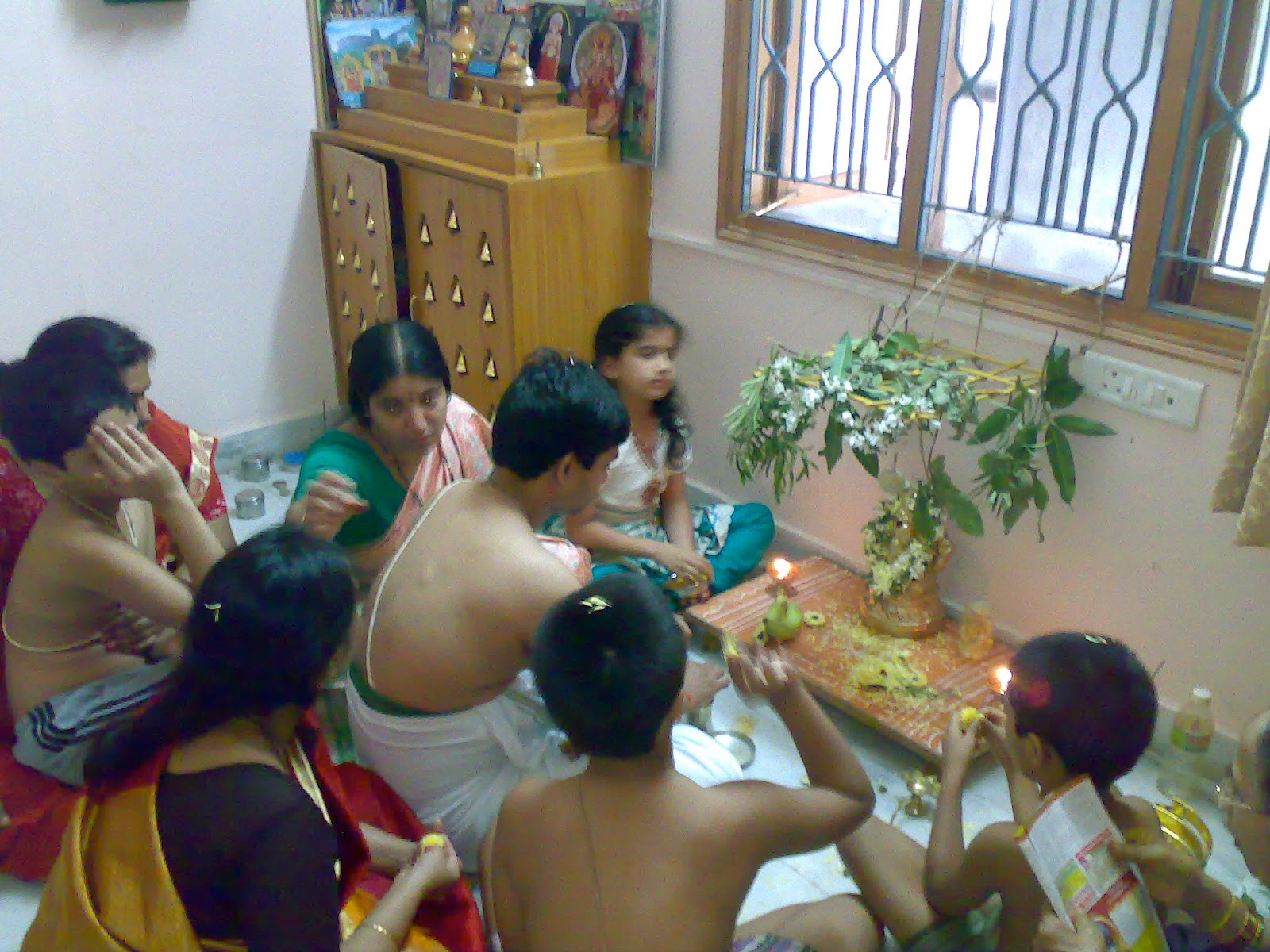
Gruhapravesam at Narasaraopet
- Vaastu Homam,
- Navagraha Homam
- Laxmi Ganapati Homam
- Chandi Homam
- Homam with Sri Suktam, Durga Suktam and Purusha Suktam

My father is seen below though from back side.
Sriku's upcoming political party's flag.
Wednesday, September 16, 2009
Running Open MQ with Java CAPS Server and accessing the same in eManager
- Download the Open MQ for the OS and start the Open MQ. This would start the MQ on the default port 7676.

- Modify the domain.xml of the Java CAPS installation for the JMS to run as "REMOTE" instead of the default "EMBEDDED". We need to make modification in the following element
- <jms-service addresslist-behavior="random" addresslist-iterations="3" default-jms-host="default_JMS_host" init-timeout-in-seconds="60" reconnect-attempts="3" reconnect-enabled="true" reconnect-interval-in-seconds="5" type="REMOTE">
<jms-host admin-password="admin" admin-user-name="admin" host="narayana-rallabandis-macbook.local" name="default_JMS_host" port="7676"/>
</jms-service> - Start the glassfish with Open MQ running as separate process...
- Start eManager
- Go to J2EE Section and add the Glassfish domain that is currently running.. You should able to see the Open MQ in the server section.
Hope this helps !!!..
Wednesday, August 26, 2009
Karnataka visit July '09
The journey followed this route.. I tried to give small explanation against each place barring Hyderabad -
Mantralayam (Raghavendra Swami temple),
Hampi -Ruins of Vijayanagara Empire, Virupaksha Peetham,
Srikari and Krishna with Lakshmi
Prem, Hampi Swamiji and Lalitha
Ihole (2nd to 4th Centureis), Pattadakkal (5th - 6 centuries), Badami (8th - 9th centuries) (These places are of great importance with respect to the starting and flourishing sculpture of South India),

You can see here Lord Vishnu in Vamana avatara in the cave dedicated to Lord Vishnu. In case of Badami rock cut temples it takes a week to complete all the 4 caves if we were to see and appreciate its grander in its true sense.
Gokarnam - one of the 12 jyothirlingas. When we went there Koti Rudrayagam is being performed there. You can see standing Ganapati there who putdown the Aatmalingam there which he took from Raavana.
Mrudeshwar -- On the seashore is awesome to watch
Udipi -- which houses Lord Krishna. How many ever times you watch you can not feel satiated.
Sringeri -- No need to say anything about this place. It seems that every year once the river Tunga overflows. It happened this time when we were there.
Horanadu -- The temple of Annapurnewari. Unforgettable glimpses of the mother. I took a rare photo of Sangeetha Saraswati there.

You can see different birds representing Saptaswaras
Dharmasthala -- Manjunatha Swami temple
Kukke Subrahmanya.
Halebeedu and Belur -- These 2 places best represent the peak of South Indian Sculpture.
Though we could not cover in detail because of a whirl wind tour, we enjoyed a lot even though it was raining heavily through out.
Ganesh Chaturdhi '09
You can see Prem and Lalitha in the front, Srikari to the right of Vinayaka Pratima. Hema with Bharadwaj in her lap. Sarada and Sriram sitting behind along with Krishna. Amma is also seen in the 2nd Photo.
Thursday, November 27, 2008
What are the difierentiators from the previous attacks?
- Its more organized and more planned
- First time ammunition has come for sea route
- Not of Serial blasts in nature
- Used different kind of ammunition not just bombs including AK 47 attacks and indiscriminate firing at several places
- Targeted Posh areas and Foreigners
- It for longer time
What are the implications?
- Could shutdown the entire financial system of the country for a day
- First time foreigners died in attacks pulling India down further in morale infront of world contries
- Exposed India's vulnarability for terrorist attacks sans time and space for umpteen number of times
- Sent message to the world that India lacks cohesion and can compromise on security
- Could have caused a dent in the investor confidence
- Already made a dent in the cricketing schedules
Common people of India are having the following questions
- If US can stop with 1 attack why cann't India do that?
- Why are we so permissible?
- How far we need to afford these fortnightly attacks?
During this attack the conversations of the journalists with the terrorists there is conscious effort for misleading making that the attacks are done because of the oppression or perpetaration against muslims.. and its done by muslims in India.. but from the conversation its evident that its more a cross border terrorism rather than that of domestic religious terrorism. Sadly everything is construed by the Netas as communal and the general public should exercise refrain from commotion.
What are the bottlenecks and causes?
- Time and again there were attacks and there are only kneejerk reactions
- This issue has always been treated from communal angle and never taken more seriously because of lack of political will and vote bank politics
- There is no sustained effort in this direction with commitment from the government
- Indian politicians always give more importance to the vote bank politics than real issues at hand
- Thousands of small childern deprived of basic modern employable education are put into religious extremist factories, fed with mis-interpreted religious texts making them into hard-core fundamentalits
What could be done and what should be done?
- Need tight co-ordination between center and state for attacking the problem which has took the dimention of War
- Coming up with laws for tackling the issue and implement them in the right spirit not giving side to communalism while dealing with terrorism
- Understand that it could not be tackled in a piecemeal approach. All the machinaries like Intelligence, Miletary, Police must coherently work toward tacking such issues
- We need to understand that the root cause is with in us because with out the permisivity of the officials the ammunition could not have come. Desist corruption atleast in the matters of internal security
- Need to shelve the "Vote Bank Politics" at least at matters of National Security and deal with the persons involved in a stern way
The biggest question remains, Can India raise as a country devoid of religion, caste and creed against the single biggest challenge for its existance as a nation?
Tuesday, September 16, 2008
Utilizing 64bit JVMs in Java CAPS Integration Server
A very common error that is observed with Java CAPS Integration Server is "Out of Memory". When this happens we observe the following:
- we can not deploy any applications further to the Application Server
- slowdown of Integration Server
We can analyze the error at the application level using profilers or other tools like 'jhat'. But at the same time we might need to have higher memory needs depending upon the application.
CPU architecture has limitation on the JVM heap size that can be allocated for a process. Some operating systems reserve portions of process address space for OS use, effectively reducing the total address space available for mapping memory for user programs. For instance, Windows XP DLLs and userland OS components are mapped into each process's address space, leaving only 2 to 3.8 GB (depending on the settings) address space available, even if the computer has 4 GiB of RAM. This restriction is not present in 64-bit Windows.
The Java HotSpot FAQ says "The maximum theoretical heap limit for the 32-bit JVM is 4G. Due to various additional constraints such as available swap, kernel address space usage, memory fragmentation, and VM overhead, in practice the limit can be much lower. On most modern 32-bit Windows systems the maximum heap size will range from 1.4G to 1.6G. On 32-bit Solaris kernels the address space is limited to 2G. On 64-bit operating systems running the 32-bit VM, the max heap size can be higher, approaching 4G on many Solaris systems. ... If your application requires a very large heap you should use a 64-bit VM on a version of the operating system that supports 64-bit applications."
It further states "Generally, the benefits of being able to address larger amounts of memory come with a small performance loss in 64-bit VMs versus running the same application on a 32-bit VM. This is due to the fact that every native pointer in the system takes up 8 bytes instead of 4. The loading of this extra data has an impact on memory usage which translates to slightly slower execution depending on how many pointers get loaded during the execution of your Java program. The good news is that with AMD64 and EM64T platforms running in 64-bit mode, the Java VM gets some additional registers which it can use to generate more efficient native instruction sequences. These extra registers increase performance to the point where there is often no performance loss at all when comparing 32 to 64-bit execution speed. The performance difference comparing an application running on a 64-bit platform versus a 32-bit platform on SPARC is on the order of 10-20% degradation when you move to a 64-bit VM. On AMD64 and EM64T platforms this difference ranges from 0-15% depending on the amount of pointer accessing your application performs."
If we are deploying the Java CAPS applications on 64 bit operating systems which are having large memory we should leverage the availability of large RAM on such platforms and high end server machines. So we should able to start the Logical host or the application server with the following JVM options such that the server starts with Large heap.
We should able to modify the <jvm-options> section of the file <logicalhost>/is/domains/<domain_name>/config/domain.xml:
- Add <jvm-options>-d64</jvm-options> at the start of the <jvm-options> section -- If neither -d32 nor -d64 is specified, the default is to run in a 32-bit environment.
- Add either <jvm-options>-XX:+UseParallelGC</jvm-options> or <jvm-options-XX:+UseConcMarkSweepGC</jvm-options> depending upon the nature of the application(s) that are being deployed on the Integration Server. For a background ref to. GC Tuning.
- Modify the following options in the section to appropriate values.
- <jvm-options>-Xmx16384m</jvm-options>
- <jvm-options>-XX:MaxPermSize=2048m</jvm-options>
- The options I gave above are for 8 core , 64 GB RAM machine
- The option <jvm-options>-server</jvm-options> may be removed since -server option is implicit with the use of -d64
Common Reasons for Out Of Memory Errors
Out Of Memory error can happen due to following reasons:
- Garbage Collection Issues
- Orphaned Class loaders
- Thread context classloader
- new Thread()
- Dangling thread
- Classes with following references
- static variables
- SQL Driver
- Commons logging
- java.util.logging.Level
- Bean util
- Details
etc..
We can analyze the problem(s) associated with such errors at application level by having GC details and/or heap dump
- -verbose:gc with -XX:+PrintGCDetails for observing GC model for tuning or altering suitable GC for the application
- -XX:+HeapDumpOnOutOfMemoryError
- -Xrunhprof:heap=dump,format=b
- jmap -dump:format=b,file=heap.bin <pid>
Analyze heap dump using Jhat
- jhat -J-mx1024m heap.bin
- http://localhost:7000
- Using built-in or custom queries to narrow down leak suspects
- Identify an object or class in the application
- List reference chains
Wednesday, July 09, 2008
Why Interoperability And What it takes to be really interoprable
Organizations invest time and money for building information systems over a period of time. These systems are built with the best of hardware and software that are available during that time. Due to the change in the socio-economic-political and opportunity reasons organizations are constantly challenged to update update themselves temporally, technology wise also. If we want that the existing solutions run as is (Which the client obviously wants since invested time and money) and yet see that these disparate systems talk to each other seamlessly we need interoperability amongst the systems.
When ever we think of such solutions in heterogeneous systems for integration we tend to think of SOA or WebServices. We also that these solutions are of panacea to all the ills of heterogeneous systems while integrating. But it takes more than just WS Software systems to be truly inter-operable. Lets examine what it takes to be inter-operable.
Lets get to the definition of interoperability:
ISO/IEC 2382 Information Technology Vocabulary defines interoperability as:
“The capability to communicate, execute programs, or transfer data among various functional units in a manner that requires the user to have little or no knowledge of the unique characteristics of those units."
By this definition we can deduce the following areas or levels are at which systems to be inter-operable:
Network and Infrastructure Layer - For interoperability amongst different protocols like TCP/IP, DNS, DHCP/BOOTP, AppleTalk, 802.1x, NFS/NIS (Different OS have different tools for making file systems accessible) etc..
Data Layer - For data access JDBC, ODBC, OLEDB, ADO, ADO.Net etc. Apart from that we are talking about file formats like XML and the different variants of XML organizations (the XML Serializers and De-Serializers available on different platforms make these documents inter-operable)
-
Program Layer - For taking care of Program level interoperability. We create services / programs that deal with the data in the Data Layer. These are of the following Channels
-
Technology specific binary formats -- RMI/IIOP in case of Java, .Net Remoting or COM interop. with respect to MS technologies. These can deal with the stateful data and have good performance numbers. But these have a caveat that they are proprietary that is the other end of the system also needs to be either Java in case of RMI and MS based COM/ .Net object in case of .Net Remoting and COM inter-op. But there are some tools like J-Integra, etc. for inter-operability between the MS – Java worlds. IIOP is supported by both Java and MS worlds.
-
WS - * Standard programs for exposing services. There are built on several set of standards like security, transaction, co-ordination and trust etc. for building robust inter-operational heterogeneous systems. WS stack is supported by both Java and MS worlds.
Rest style services using HTTP. These deal with stateless data.
Process Layer - This layer builds on top of the program layer and helps in orchestrating the programs or services. The need for this layer is because of the geographical / temporal dispersion of the organization of the Business and Systems. And also the raising business demand calling for
Asynchronous Availability of the systems for
High Availability
Transactional Nature of the Heterogeneous systems
Reliability
These requirements of the systems are met by the industry in terms of
Messaging Infrastructure (support for Queues and topics). Most of the MQ vendors have adopted to JMS standards and gave API for accessing the MI.
Mainframe Infrastructures – These are of BLI/SLI/Data and RPG types. These systems provide for unlocking of existing production systems but at the same time require callable interfaces. Again most of the systems have provided Java API for accessing the systems.
Business Process Infrastructure – these are evolved as open standards like BPMN and BPEL4WS etc.. These process infrastructure is supported with Adapters for connecting to the data channels. These are typically supported in Integration Servers of the vendors like Sun's Glassfish with Open-ESB, MS Biztalk server etc..
Security Layer – This layer integrates the users with the systems in a secured way. We can call this identity layer also. Here we see AAAs (Authentication, Autherrization and Accounting) for Inter/Intra Organization.
Authentication : Kerberos / Directories / X.509 / SSL/TLS etc..
Authorization : ACL systems / RBAC systems
Here We further talk about the SSO (Single Sign On) and the other inter-operable standards like SAML, WS – Federation, User token profile, CardSpace etc.. WS – Security standards deal with message level security too for maintaining integrity and non repudiation of the message that is traveling. The IDM (Identity Management Suites) comes into picture at this layer and all the major vendors like Sun/MS have their own IDM Suites for comprehensive solutions for organizational needs.
Management Layer – When we think of all the above infrastructure and disparate systems talking to each other for different needs, we need a way to manage the solution that is offered from some console. There comes need for Management protocols like SNMP/ WMI/ WBEM/CIM/JMX etc. for managing the application exposed interfaces and configurations. Every integration vendor offers some management connector for deployed applications.
Lets examine some of the layers from the JCAPS perspective and how does JCAPS offers interoperability in my next post.
Monday, July 07, 2008
Moving back to Hyderabad from Bangalore
After a month or so I now do not have any regrets though for this movement except for parting from the role and technology. I could now have a more balanced life with my family and could work on some basic things relating to personal fulfillment which I was neglecting since long.
Joining kids for Karnatic Music
Previous week I joined both of my kids for attending Music classes. The classes are run by a blind teacher Shri. Ravi Subrahmanyam. He has to his credit given several concerts at Ravindra Bharati.
I got a double benefit from this deal that my wife also started reviving her forgotten stuff.
Tuesday, March 11, 2008
Sun Tech Days 2008 Hyderabad
I recently attended Sun Tech Days event at Hyderabad. I was told that this event one of the biggest event Sun has after the Java One with respect to its attendance with 5000 people attending the same. I was told that around 30% are repeaters. One thing is clear its the biggest developer Tech Days of all with respect to attendees as well as sessions.
There might be couple of reasons for the same the first and foremost the kind of facilities which are excellent at the Hyderabad International Convention Center (HICC) and the other one Java is very popular among the services industry here.
The following are the interesting keynote sessions.
- First day keynote is from Rich Green went on with JDK, acquisition of MySQL, xVM, happenings with
GlassFish,
NetBeans, Solaris and many
other similar offerings provide a comprehensive suite of products that
cover the entire portfolio of software. One thing he clearly missed is regarding 'SOA' offering of SUN though it offers a complete SOA stack, when there were many Program managers from the industry. - Second day keynote was by Oracle and it has done a beautiful presentation of its SOA Suite -- Fusion. There was one more keynote from David Axmark
- MySQL
co-founder. He explained about the following innovations which are a kind of revelations.. - Storage
Engine Innovation (Falcon,
InnoDB,
PBXT
& others) - "Free" Time Innovation (MySQL proxy,
Language Connector) - Buying Innovation (MySQL
Cluster
from Ericsson) - Business Innovation (open source in 1996, work with driver support from host of languages, on any platform, all compiled from one
source code, designed with portability in mind, simple recompile for
64-bit portability) and other different kinds of innovation give MySQL
66% of market share in enterprises. Google, Facebook,
Wikipedia,
Yahoo, YouTube are some of the prominent names. - Thirdday there was a give away for the University students who's shown their mettle at the contest by Sun 'Code For Freedom'. This enthused the participants on the University Day.
Saturday, March 08, 2008
NetBeans 6.1 Beta now available
The most interesting portion for me is the startup time and its has come a long way on that. The other notable features for me from a developers stand point are
- MySQL support in Database Explorer
- From documenting the code perspective Javadoc code completion is good
- JSF 'CURD' Generator is back because of Popular demand
- Update center modules for AXIS and SOAP UI
- Visual Web Pack
- the support for server side scripting with Project Phobos plugin
- SOA Enerrpise pack with
- BPEL editing and debugging
- WSDL Editor with WSDL extensions for file/ftp/jdbc/sap etc.
- XSD support
- JAX-WS plugin making the development of Java based webservices easy
- Integration with Sun's enterprise application server Glassfish + Open - ESB
still has a say there with its editors and BPEL Debugger etc.
Having said tht I feel that one thing that is not so good in NetBeans for making it 'The only IDE
you need!' is the debugger. I see that its the 'vulnerable' place in NetBeans where Eclipse still holds it.
The following things make Eclipse Debugger more attractive
- Ease of use - even naive user can debug
- Multi thread debugging
- Feasibility to attach the source
- Does not break when there is no source is available rather it does a 'jad' or 'javap' for you and gives the possible structure of the source file
- If we give the project references it can locate the source file for you.